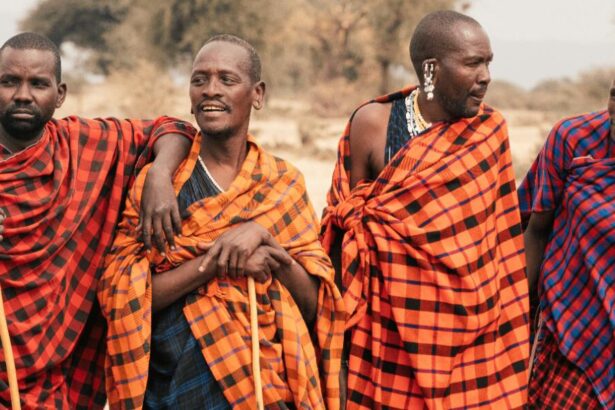
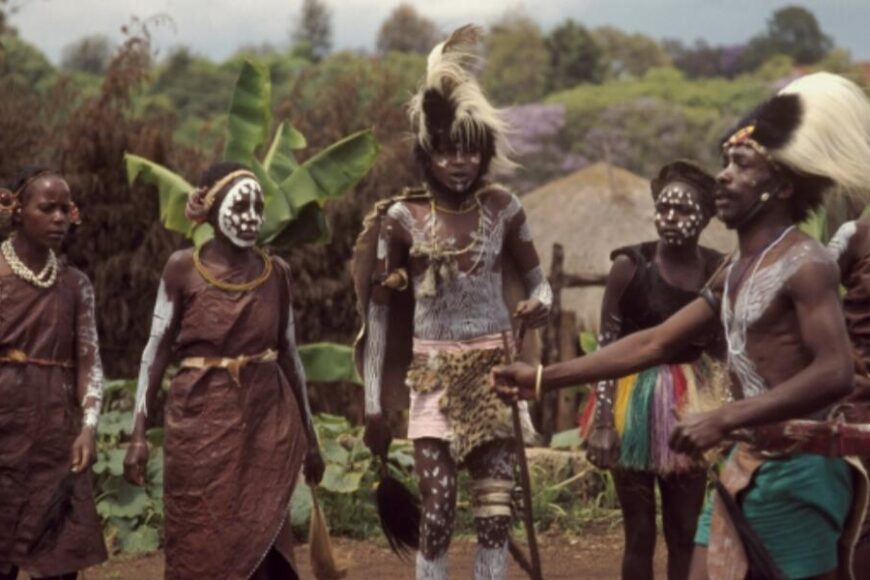
The Kikuyu, known in their own language as Gikuyu or Agikuyu, are a major Bantu-speaking community native to the fertile highlands of south-central Kenya. Their homeland lies around the slopes and foothills of Mount Kenya, where productive soils and reliable rainfall have supported their way of life for centuries. By the late 20th century, the Kikuyu had become Kenya’s largest ethnic population, numbering well over 4.4 million people, representing about one-fifth of the nation’s total population.
Origins and Early Life
The Kikuyu gradually settled in their present territory between the 17th and 19th centuries, moving southward from regions to the northeast. Traditionally, their livelihood centered on highly organized farming systems. Using hand tools such as hoes, they cultivated millet, beans, sorghum, peas, and sweet potatoes, which formed the foundation of their diet. Over time, the introduction of new crops transformed Kikuyu agriculture, and today the community is known for producing coffee, maize, fruits, vegetables, and wattle as major cash crops. In many areas, sophisticated irrigation channels and terracing were used to make the most of hilly terrain. Livestock herding—particularly goats and cattle—played an important supporting role.
Settlement Patterns and Social Structure
Before colonial intervention, Kikuyu families lived in individual homesteads, each enclosed by a protective hedge. A single homestead housed a man, his wives (if polygynous), and children, with each wife’s hut forming part of the compound. The Mau Mau Emergency of the 1950s changed this pattern dramatically. The British administration forcibly resettled Kikuyu into villages as part of their counterinsurgency strategy. After the uprising ended, many people remained in these more centralized settlements because of economic benefits such as easier access to markets and infrastructure.
The foundational social unit is the mbari, a patrilineal extended family grouping related men, their spouses, and children. Multiple mbaris make up the Kikuyu’s nine major clans, which contain various sub-clans.
Governance and Cultural Beliefs
Kikuyu society is traditionally organized through age sets, which structure political power and social responsibility. Every year, boys are initiated, eventually joining broader generation sets that take on leadership for periods typically lasting 20–30 years. Authority rested with councils of elders who belonged to the ruling generation at any given time.
Spiritually, the Kikuyu revere Ngai, an all-powerful creator associated with Mount Kenya, believed to be a sacred meeting place between the divine and humanity. Ancestors also hold an enduring presence in Kikuyu belief systems, guiding and influencing daily life.
Role in Kenya’s Independence
The Kikuyu were at the forefront of Kenya’s early anti-colonial movements, driven in part by grievances over the loss of their fertile highlands to European settlers. During the 1920s and 1930s, they played a leading role in political mobilization, which culminated in the Mau Mau rebellion of 1952, a major turning point in the struggle for national liberation. Their activism laid much of the groundwork for Kenya’s march toward independence in the late 1950s and early 1960s.