
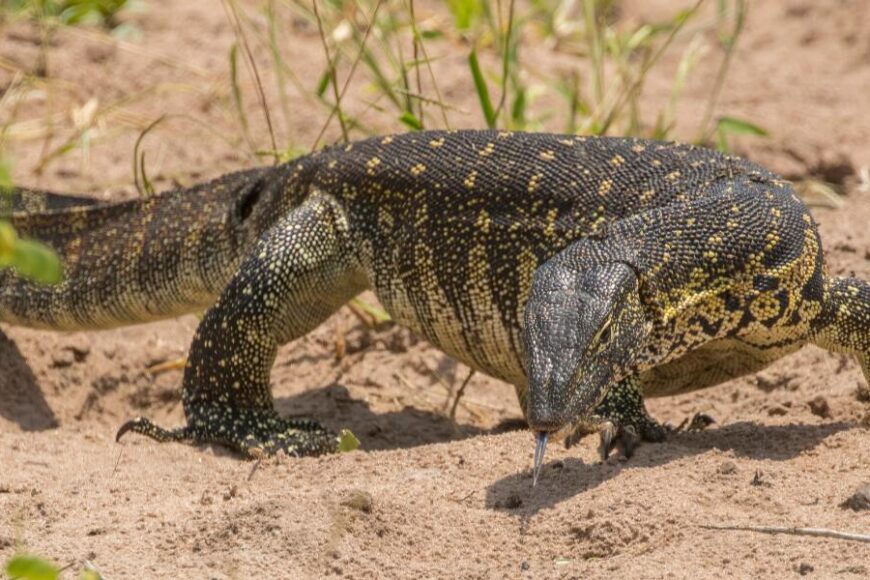
The Nile Monitor Lizard (Varanus niloticus) is one of Africa’s most impressive reptiles. Found throughout sub-Saharan Africa and along the Nile River, this lizard is renowned for its size, agility, and adaptability. Nile Monitors are semi-aquatic, making them unique among the Varanus family and a fascinating species for wildlife enthusiasts, herpetologists, and travelers exploring African rivers and wetlands.
Physical Characteristics of the Nile Monitor Lizard
Nile Monitors are large lizards, with adult males often reaching lengths of 2 to 2.5 meters (6–8 feet) and weighing up to 14 kg (30 lbs), though some exceptional individuals may be larger. They have a long, muscular tail, strong limbs, and sharp claws, which make them excellent swimmers and climbers.
Their skin is patterned with dark brown or black coloration, adorned with yellowish or cream-colored spots, which provides excellent camouflage in their natural habitats. The powerful jaw and sharp teeth allow them to feed on a wide variety of prey.
The Nile Monitor Lizard is a fascinating species for anyone interested in African wildlife. Whether you are on a safari in Tanzania, Kenya, or Uganda, spotting one of these powerful reptiles is a memorable experience. Their unique combination of size, intelligence, and adaptability makes them one of Africa’s most remarkable reptiles.
Habitat and Distribution
The Nile Monitor is commonly found along rivers, lakes, swamps, and wetlands throughout Africa. They are particularly abundant along the Nile River but also thrive in rivers and streams across Tanzania, Kenya, Uganda, and Zambia.
These lizards are semi-aquatic, spending much of their time in water but often venturing onto land to bask, hunt, or find nesting sites. They are highly adaptable and can survive in a range of environments, from dense forests to savannahs and even near human settlements.
Diet and Hunting Behavior
Nile Monitors are carnivorous and opportunistic hunters. Their diet includes:
- Fish and amphibians
- Birds and bird eggs
- Small mammals
- Insects and other invertebrates
- Carrion
They are excellent swimmers, using their powerful tails to propel themselves through the water, and can hunt underwater with remarkable speed and precision. On land, their agility and stealth allow them to capture prey efficiently.
Reproduction and Life Cycle
Nile Monitors are oviparous, meaning they lay eggs. Females typically lay 20–60 eggs in burrows or abandoned termite mounds during the dry season. The eggs incubate for approximately 6–9 months, depending on environmental conditions.
Hatchlings are independent from birth and must fend for themselves, though their camouflage and agility increase their survival chances in the wild. Adult Nile Monitors have few natural predators aside from large crocodiles, big cats, and humans.
Interesting Facts About the Nile Monitor
- Aquatic Adaptation: Their flattened tail and strong swimming skills make them formidable in water.
- Ancient Species: Monitors have existed for millions of years, making them one of the oldest reptile lineages.
- Climbing Ability: They are excellent climbers and can scale trees in search of eggs or prey.
- Long Lifespan: In the wild, Nile Monitors can live 10–15 years, and even longer in captivity under proper care.
Conservation Status
The Nile Monitor is currently listed as Least Concern (LC) by the IUCN due to its wide distribution and adaptability. However, threats include:
- Habitat destruction and wetland drainage
- Hunting for their skin, meat, and pet trade
- Human-wildlife conflict in populated areas
Conservation efforts focus on habitat protection and responsible wildlife management.