The Maasai are perhaps the most famous tribe in Africa, renowned globally for their unique customs, powerful warrior heritage, and deep connection to the land of northern Tanzania and southern Kenya. CelebritySafaris.tours arranges private, respectful, and non-commercial encounters with trusted communities, guided by our own expert Maasai Field Safety Specialist, Lemein.
The Maasai People – Culture, Tradition, and Life
This extensive Q&A provides detailed information on the history, social structure, beliefs, and daily life of the iconic Maasai people of East Africa.
The Maasai are a famous Nilotic ethnic group known for their traditional, semi-nomadic, and pastoralist way of life. They inhabit large, selected territories across the border of northern Tanzania (near areas like the Serengeti and Ngorongoro) and southern Kenya (near Maasai Mara and Amboseli). They speak the Maa language.
Maasai society is strongly patriarchal, with elders determining major matters. Wealth is measured not by currency, but by the number of children and cattle a man possesses. They believe having many cattle but few children indicates poverty, and vice versa. Their culture revolves entirely around their cattle, which they view as a divine gift.
The traditional diet is sourced almost entirely from their herds, consisting of six basic foods: meat, blood, milk, fat, honey, and tree bark. They consume fresh and curdled milk. Critically, cattle blood is obtained by nicking the jugular vein (avoiding killing the valuable animal) and is mixed with milk for ritual ceremonies or as nourishment for the sick. More recently, their diet has been supplemented with farm crops like maize and rice.
Shaving the head is symbolic of a fresh start and is done to celebrate key rites of passage, such as circumcision and marriage. Conversely, Maasai warriors (Moran) are the only tribe members allowed to grow their hair long, typically styled in thinly braided strands, marking their identity during this age-set.
Traditional Maasai houses (Enkaj or Manyattas) are impermanent, circular, or loaf-shaped structures built by the women. The materials used include mud, sticks, grass, ash, and famously, cow dung to make the roof waterproof. Their villages are secured by a circular fence called an Enkang (kraal) built by the men, which serves to protect the valuable cattle inside at night from predators.
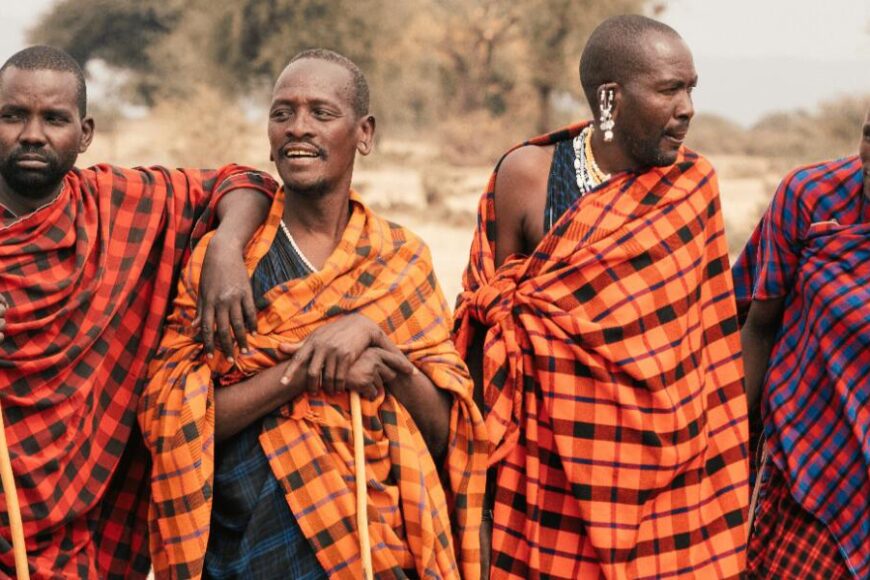
The Shúkà is the cloth (now commercial material, replacing animal skins) wrapped around the body. While red is the most favored color (symbolizing blood and bravery), black, blue, and patterned cloths are also worn. The beaded jewelry (made primarily by women) is essential ornamentation, with colors conveying meaning (e.g., red = bravery, white = peace, blue = water).
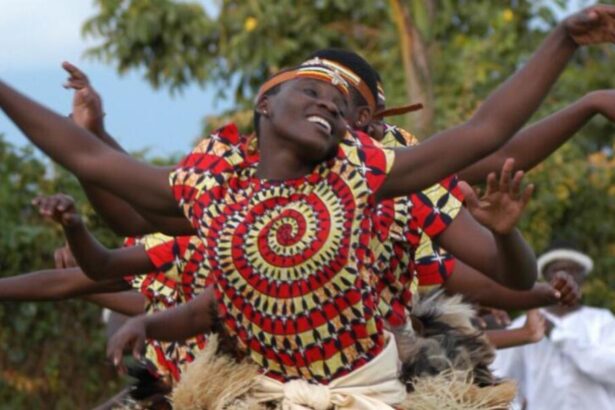
Maasai music is overwhelmingly vocal and rhythmic; they typically do not use musical instruments (aside from large horns for certain songs). Their music relies on a chorus singing harmonies led by an olaranyani (song leader). The jingling sound of their heavy beaded jewelry often adds to the rhythm during their famous dances, like the Adumu (jumping dance).Maasai music is overwhelmingly vocal and rhythmic; they typically do not use musical instruments (aside from large horns for certain songs). Their music relies on a chorus singing harmonies led by an olaranyani (song leader). The jingling sound of their heavy beaded jewelry often adds to the rhythm during their famous dances, like the Adumu (jumping dance).
The traditional diet is sourced almost entirely from their herds, consisting of six basic foods: meat, blood, milk, fat, honey, and tree bark. They consume fresh and curdled milk. Critically, cattle blood is obtained by nicking the jugular vein (avoiding killing the valuable animal) and is mixed with milk for ritual ceremonies or as nourishment for the sick. More recently, their diet has been supplemented with farm crops like maize and rice.
Shaving the head is symbolic of a fresh start and is done to celebrate key rites of passage, such as circumcision and marriage. Conversely, Maasai warriors (Moran) are the only tribe members allowed to grow their hair long, typically styled in thinly braided strands, marking their identity during this age-set.
Traditional Maasai houses (Enkaj or Manyattas) are impermanent, circular, or loaf-shaped structures built by the women. The materials used include mud, sticks, grass, ash, and famously, cow dung to make the roof waterproof. Their villages are secured by a circular fence called an Enkang (kraal) built by the men, which serves to protect the valuable cattle inside at night from predators.