The Baganda people, Uganda’s largest ethnic group, are the cultural heart of central Uganda. Their traditions are deeply rooted in agriculture, strong clan systems, and vibrant cultural practices that have endured for centuries. Despite modern influences such as urban living, Christianity, Islam, and Western lifestyles, the Baganda maintain a rich heritage that defines their identity and strengthens community bonds.
Daily Life and Economy
Agriculture and Farming
Farming forms the backbone of Baganda daily life. Families cultivate staple crops like bananas (matooke), cassava, yams, sweet potatoes, and coffee. Matooke is central to local cuisine and culture, symbolizing hospitality, sustenance, and tradition.
Fishing Around Lake Victoria
Fishing is a vital economic activity for Baganda communities along Lake Victoria. Traditional methods using wooden canoes and handmade nets continue to supply local diets and support trade.
Traditional Crafts
Baganda artisans are skilled in creating barkcloth (olubugo)—a UNESCO-recognized heritage—and crafting specialized iron tools for farming and daily life.
Community Life
Village life emphasizes cooperation through communal farming, home construction, and food sharing (okubaka), fostering strong social bonds and reinforcing community values.
Culture and Traditions
Language and Oral Heritage
Luganda, the Baganda language, is central to identity. Rich in proverbs, storytelling, and oral traditions, Luganda is widely spoken in daily life, media, and education across central Uganda.
Music, Dance, and Celebration
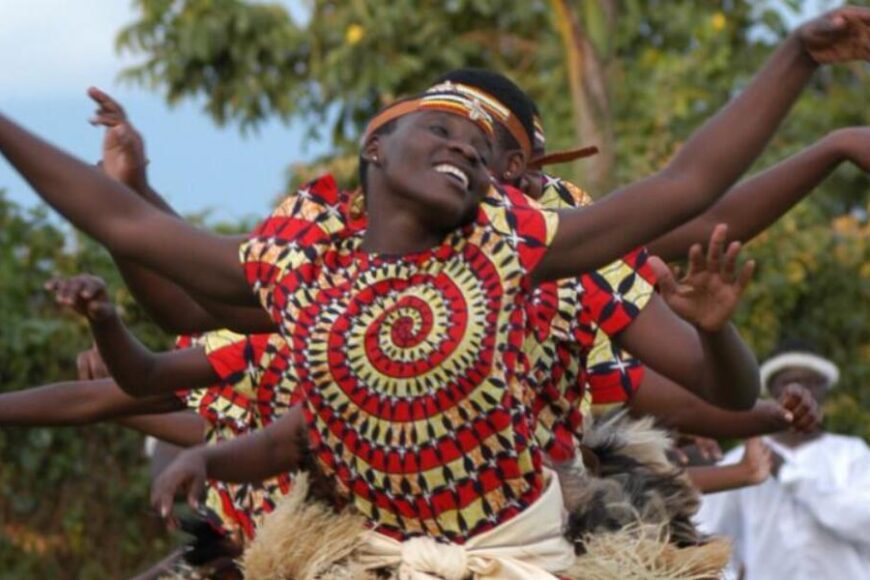
Music and dance are essential to Baganda culture. Traditional performances feature drums, xylophones, and rhythmic movements, with iconic dances like Bakisimba performed during ceremonies, celebrations, and royal events.
Traditional Dress
Cultural attire reflects identity: women wear the busuuti, and men wear the ekanzu, especially during weddings, festivals, and formal events. Western clothing is common in everyday life, blending modernity with tradition.
Clan System
The Baganda clan system is central to social organization. Each person belongs to a clan that determines lineage, social roles, and responsibilities. Marriage within the same clan is traditionally prohibited, promoting unity and respect.
Social Structure and Beliefs
Family and Authority
Extended families form the backbone of Baganda society. Traditionally, authority rested with the father or husband, though modern family structures now coexist with these cultural norms.
Religion and Spiritual Beliefs
Most Baganda practice Christianity (Catholic or Protestant), alongside a significant Muslim population. Traditional beliefs in ancestors and spiritual practices remain important, blending seamlessly with modern religions.
Respect for Elders and Ancestors
Respect for elders and ancestors continues to guide moral values, decision-making, and social conduct, serving as a cornerstone of Baganda culture.
Modern Life and Cultural Heritage
Today, the Baganda balance tradition with modernity. Urban living, education, technology, and global influences shape contemporary life, yet strong ties to ancestral villages and cultural practices continue to preserve their heritage. This blend of progress and tradition defines Baganda identity in modern Uganda.
Why Explore Baganda Culture
Visitors to central Uganda can experience authentic Baganda village life, from traditional food preparation and music to clan customs and communal activities. Engaging with Baganda culture provides travelers with a deeper understanding of Uganda’s history, values, and traditions, creating a rich and memorable cultural journey.